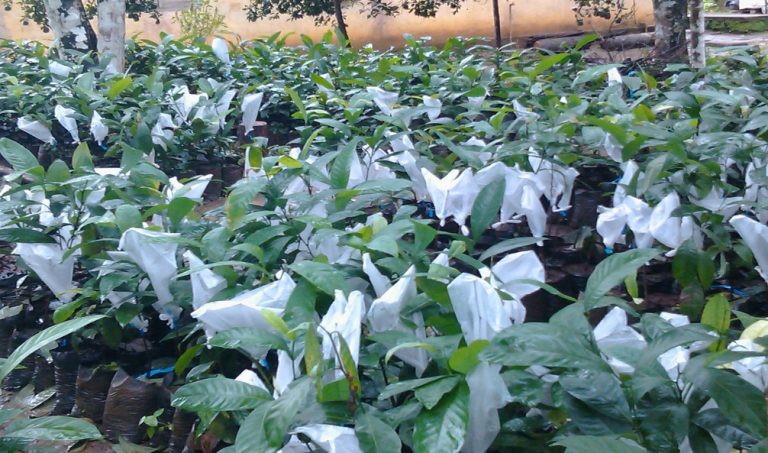
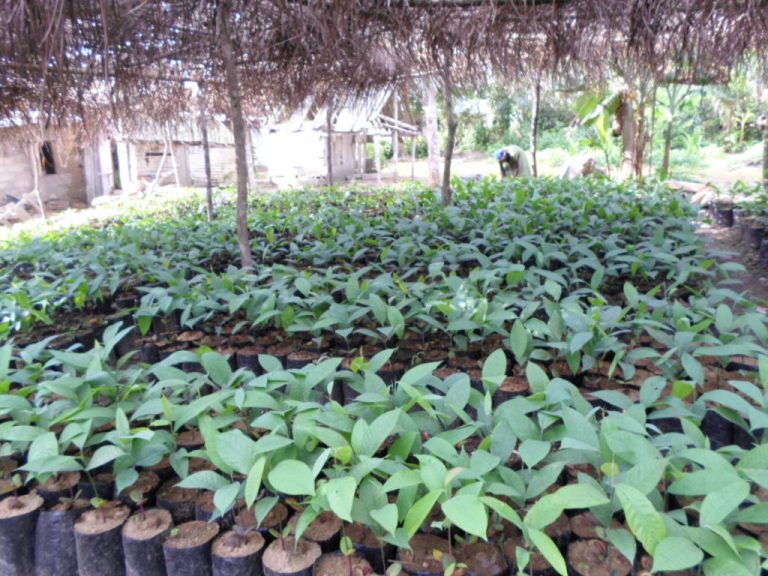
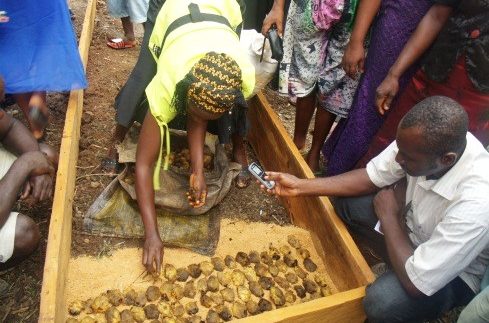
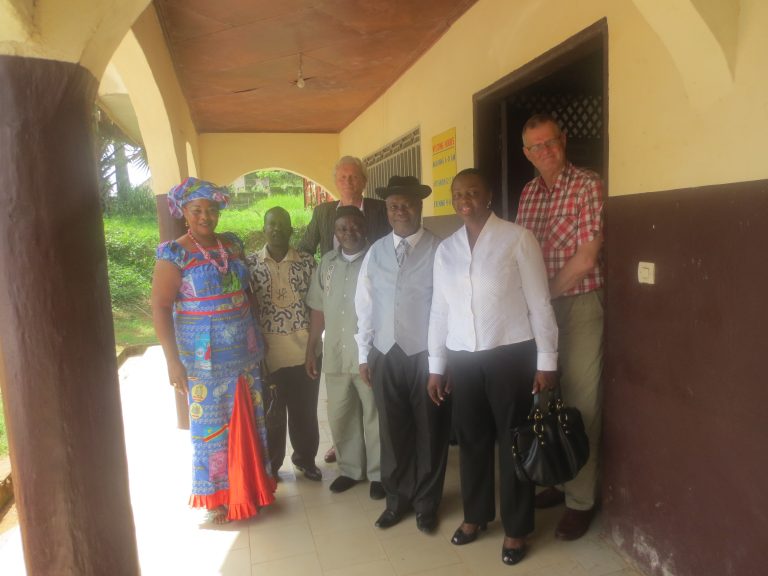
Manyu Community Radio (MCR) was a lucky winner of Stem van Afrika (SvA) 2012 call for proposals, and for close to two (2) years, MCR has been broadcasting programmes on an innovative project on the domestication of ‘Bush Mango’ to the over 750,000 listeners of its coverage area.
Words cannot describe the euphoria of Farmers and many listeners of MCR after listening to the first few programs on the domestication of their most cherished ‘Bush Mango’ tree, for it is not only the main ingredient of a staple dish, it is also a main source of income to almost all the families where the tree grows. The ‘Bush Mango’ tree is a forest tree which was not known to be grown hitherto this project. The domestication of such an important tree to the farmers and the population is seen as bringing hope of assurance of their daily meal and eminent increase in income in the entire region. The long term important goal of the ‘bush mango’ trees protecting the environment with their huge canopy is not of much interest to them.
20,000 people in 14 village communities came out to anxiously listen to the project team in the communities. 501 persons benefited directly from trainings on domestication. Over 10,000 have been planted, 8,275 grafted seedlings and 1,814 non-grafted trees were distributed to participants. A Cooperative of Farmers was created to organize the NTFPs sector in the region to increase the quantity NTFPs produced, build capacity of farmers, provide a common market to fight exploitation of farmers by traders and increase income. MCR will continue to produce and broadcast programmes on ‘Bush Mango’ domestication for listeners are anxious to listen and share experiences and above all to harvest the first fruits from the grafted trees.
The project is based on the use of Irvingina Wumbulu and Irvingina Gabonesis locally known as ‘Bush Mango’ in Cameroon to alleviate poverty and protect the environment. The project has introduced domestication of Irvingina Wumbulu (bitter bush mango) and Irvingina Gabonesis, (sweet bush mango) non-timber forest trees regarded as very precious to the inhabitants of the Manyu region for its economic value.
The sweet bush mango is consumed as a fresh fruit while the kernel of both species is used to thicken and flavour soup. The two species are harvested in different season, one in the dry season and the other in the rainy season. The Kernel is sold mostly to traders from neighbouring Nigeria in cross-border trade and the high prices it fetches contribute greatly to the farmers’ income and significantly to income in the region.
Though economically valuable, bush mango has never been domesticated (planted) in Manyu region, the fruits are harvested from the wild in the forest. Farmers move long distances and spend days in the forest, exposed to attacks from wild animals and snake bites to harvest the precious bush mango.
Thanks to the Dutch NGO, the Manyu people are looking forward to a boast in their income and improvement of the livelihoods in the near future. The Manyu people will forever remain grateful. See reports for more information on the project.